Hour degf.
Thermal conductivity of hardwood siding.
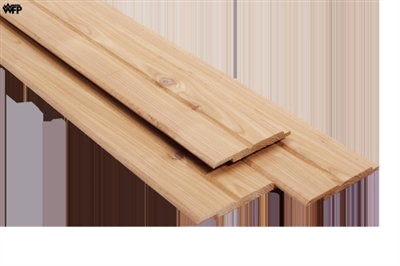
Plywood typically has a k value of 1 or less while ceramic tile for.
Values are also presented which will permit modification of the thermal conductivity factors when conditions require other mean temperatures.
A collaborative platform that significantly improves the process to chronicle share and advance projects online.
Thermal conductivity of pine.
K is the heat transmitted through a 1 inch thickness of homogenous material per square foot per hour when there is 1 degree of temperature change.
This change in construction material can be attributed to the thermal conductivity of softwoods being approximately 1 7 that of brick.
Thermal conductivity declines as the density of the wood decreases.
For example the thermal conductivity of pine in the direction of the grain is 0 22 w moc and.
Presently wood has become an alternative to brick in the construction of homes.
The ability of a material to conduct heat is measured by the thermal conductivity k.
Thermal conductivity is a material property that describes ability to conduct heat thermal conductivity can be defined as the quantity of heat transmitted through a unit thickness of a material in a direction normal to a surface of unit area due to a unit temperature gradient under steady state conditions.
A thermal conductivity of 0 1213 w mk for pine was the product of the hfm measurement.
The higher the k value the greater the ability of the material to conduct heat.
K btu inch sq ft.
The thermal conductivity of wood is relatively low because of the porosity of timber.
Thermal conductivity is presented as a k value and the higher this value is the better able it is to conduct heat.
C is known only when the k the thermal conductivity of a material is known.
This term is typically expressed in units of btu per hour per sq ft per degree fahrenheit per inch of thickness.
The lower the k the higher the insulation value.
In the direction of the grain the thermal conductivity of wood is about twice what it is perpendicular to the grain.